Subject Matter Expert Video Production Without Technical Skills
Experts can now produce polished training videos without mastering video editing software.
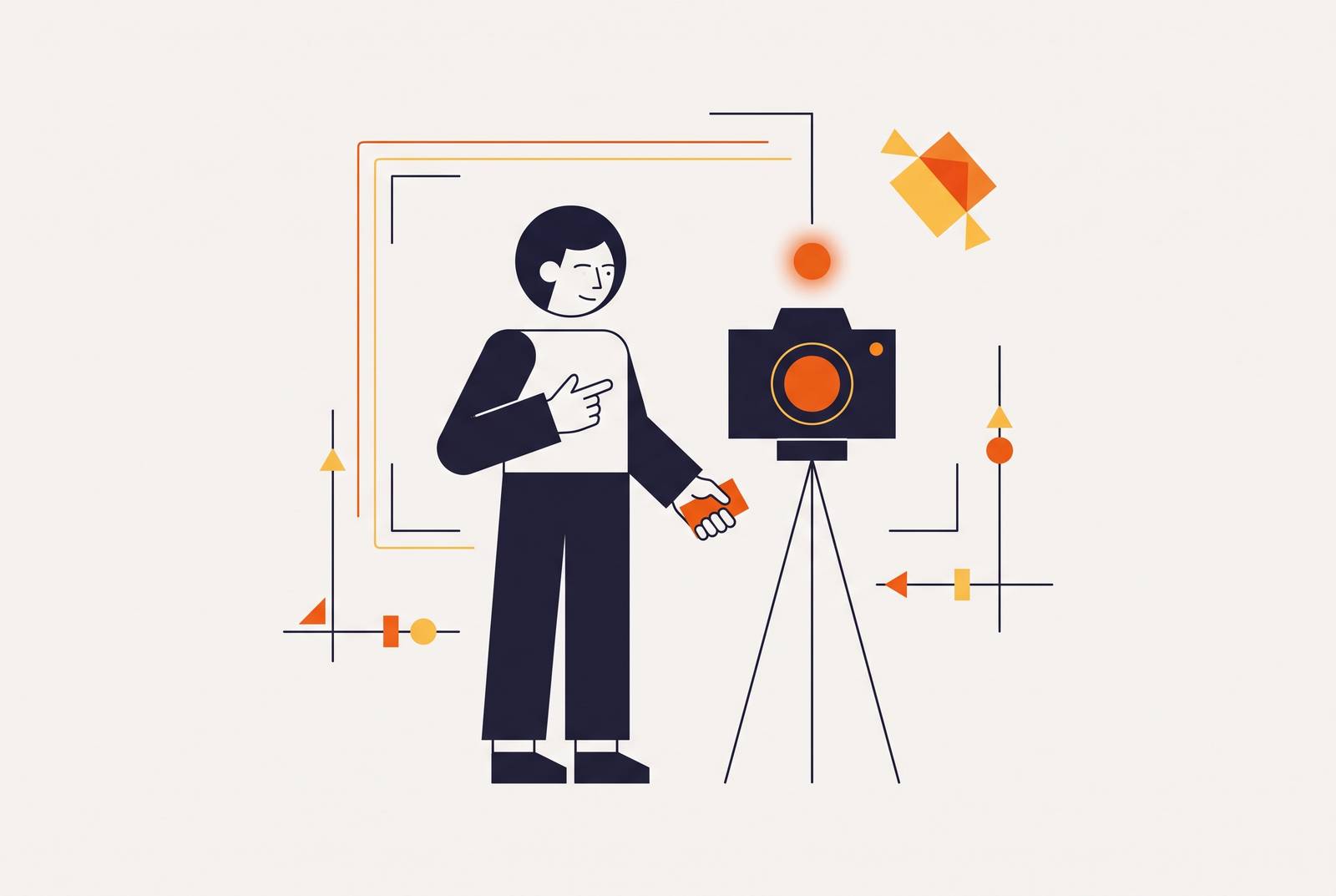
Subject matter experts can now produce polished training and product videos without learning video editing, because AI has taken over the technical layer of production entirely. A compliance officer, product manager, or engineer can turn a rough screen recording or an existing document into a finished video, with the AI handling scripting, voiceover, captions, and even localization.
Why SMEs are now expected to make videos
Picture a compliance officer who knows a regulatory process better than anyone else in the building. She can explain it in her sleep. By the time the video ships, the process may have already changed again.
That gap between who holds the knowledge and who can ship it defines the problem most organizations now face with video. Video has become the default format for training, onboarding, and product education, not a bonus format reserved for marketing. Yet the production mindset built around video, specialized tools, specialized editors, long review cycles, pixel-perfect polish, was designed for marketing campaigns, not for internal experts working against a deadline with no production team behind them.
The real obstacle isn't a lack of willingness among SMEs to produce content. Most compliance officers, product managers, and engineers would happily record a video if it didn't require learning an editor's timeline, color correction, and audio mixing on top of their actual jobs. That assumption, that making a video means learning production software, is the ownership problem at the root of stalled training libraries and outdated onboarding content.
The cost compounds with every product release, every policy update, every new market the company enters. For training content specifically, currency is the more urgent failure. A slightly rough video that reflects how a process works today teaches better than a beautifully produced video that describes a process that no longer exists.
What "production skills" means
Video production was never one skill. It's a stack of distinct tasks: scripting, recording, editing, voiceover, captioning, and localization, each requiring its own craft. For years, an SME could contribute knowledge at the very start of that stack and then had to wait while specialists worked through every step that followed: cleaning up the script, recording a professional voiceover, assembling the timeline, correcting color, generating captions, and producing translated versions.
AI has automated precisely the steps in that stack that require craft but not subject knowledge. What used to be a sequential handoff between five or six specialists collapses into a single process the SME controls from start to finish.
What AI still can't do is decide what matters. Accuracy, judgment about what to include, and the strategic call on what an audience actually needs to understand all remain the SME's responsibility. That division of labor is the right one: AI handles craft, the SME handles truth. A video can be flawlessly produced and still wrong, and no automation fixes that. The expert's review is still the only safeguard against shipping something polished but incorrect.
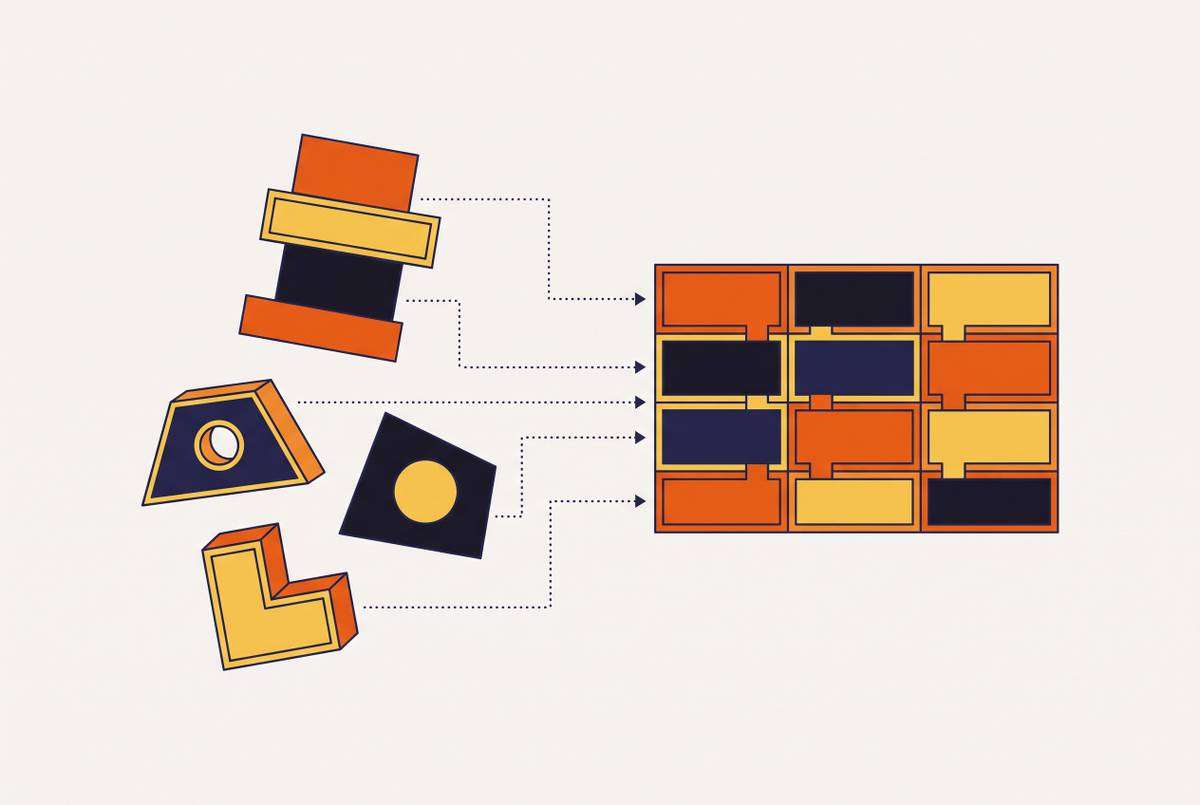
The more consequential shift in recent AI tooling isn't sharper avatars or faster rendering: it's the ability to use documents the organization already has, SOPs, release notes, product specs, PDFs, as the direct input for video, removing the scripting bottleneck altogether. Document-to-video platforms take what already exists and turn it into a structured video, so the SME who wrote a 40-page onboarding manual doesn't have to rewrite a word of it to produce a full video library. The conversion step was the bottleneck, and that's the step AI just closed.
The workflow an SME uses to go from knowledge to finished video
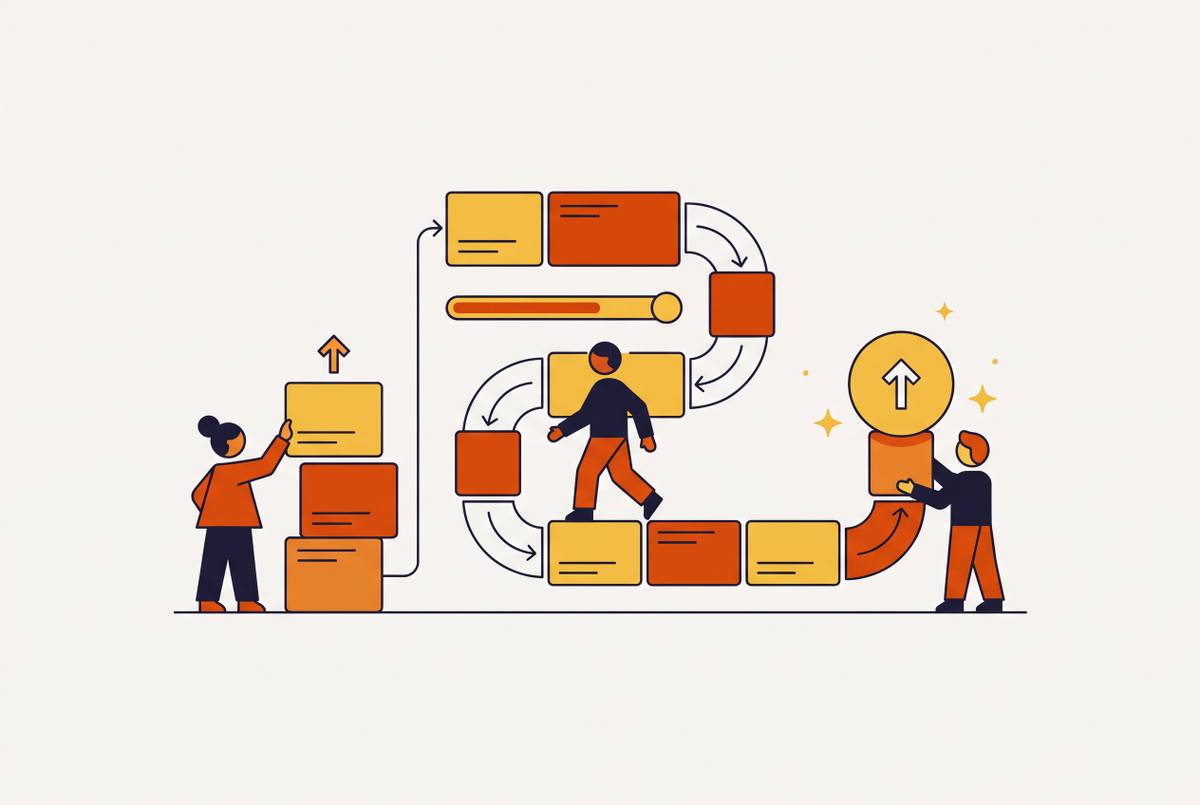
The workflow an SME follows with AI isn't a stripped-down version of a studio production pipeline. It starts from a different premise entirely: build from what the SME already has, not from what a production team would need to begin.
The process starts with a screen recording or an uploaded document, an SOP, a PDF, a slide deck already sitting in a shared drive. No script is required beforehand. No studio setup, no camera presence, no need to sound polished while talking through a process. Hesitations, filler words, and an informal walkthrough are all acceptable raw material, because the next step exists specifically to clean that up.
AI rewrites the script from the raw narration or the uploaded document, cutting filler, tightening the structure, and adjusting tone. The SME reviews and edits that written script, not a timeline full of audio waveforms and keyframes. Reviewing and editing text is a skill every SME already has from years of writing emails, reports, and documentation, unlike adjusting a video timeline. Adjusting a video timeline is not, and that's exactly the skill this workflow removes from the equation.
Once the script is approved, a lifelike voiceover is generated automatically, and smart zoom and captions are applied to the recording without manual work. A platform like Clueso generates accompanying step-by-step documentation from the same source material at the same time, giving a team a finished video and a written SOP article from one effort. One-click translation then produces localized versions across supported languages, without the SME re-recording a single line or commissioning a separate localization vendor.
None of this hands final judgment to the software. AI doing the heavy lifting on script cleanup and voiceover generation is not the same as AI deciding what's accurate. The SME's expertise remains the quality gate at every step, checking the rewritten script against what actually happened, confirming the documentation matches the real process, verifying the translated captions still say what they're supposed to say, and that gate is by design. Automation handles craft; the person who knows the subject handles truth.
Where SME-led video delivers clearest results
SME-led AI video works best wherever content needs to be accurate, updated often, and produced in volume, exactly the conditions where traditional production struggles most. Three use cases stand out.
Customer education and onboarding benefit directly, because the people closest to the product, not a separate content team, hold the knowledge customers need. AI-assisted production lets those people ship tutorial content themselves. A practical approach many teams use: pull the highest-volume support tickets, convert each one into a short tutorial video, and watch inbound ticket volume for that topic drop as a direct result.
Sales enablement and product demos follow a similar pattern. AI-assisted video lets them build explainer and demo content on their own release schedule.
Learning and development at scale across a distributed company sees the clearest multiplier effect. One video, produced once by one SME, can be localized into dozens of languages and reach employees across every region the company operates in. That's a reach no live training session or unlocalized video could ever match.
The format fits worst where live-action authenticity, deep interactivity, or a specific person's presence is the actual point of the content. Leadership communications and culture-setting messages often need a real human face and voice behind them. Teams building that kind of interactive training should plan around that gap.
Why freshness beats polish for training video
A training video that looks expensive but no longer matches how the product or process actually works is a liability sitting in a library, actively teaching people the wrong thing. Every content change requires a full reshoot under traditional production, and the cost and logistics of a reshoot create a strong incentive to just leave the outdated video up rather than fix it, so traditional production structurally produces more of these liabilities than it should.
AI-assisted production changes that math entirely. When a process changes, the SME re-records a quick walkthrough or uploads the revised document, and the AI regenerates the script, voiceover, and captions from there. An update that used to require booking a production slot now takes minutes.
That speed advantage compounds. The faster a team can update a video, the more current the whole library stays, and the more learners encounter content that actually reflects reality. A healthy video library is one where the overwhelming majority of content is current. A library where a meaningful share of videos are outdated is actively misleading the people relying on it, and most organizations don't realize how large that share has grown until someone audits it.
Organizations with complex products that update often are the most exposed to this risk, because every release cycle adds new content debt the moment a workflow requires a specialist to process it. The real advantage of SME-led production is that it puts the person who knows the process changed in direct control of fixing the video. They know what shifted, they record the new version, and the output is ready without sitting in a production queue behind five other requests. SMEs should stay in the production seat permanently, not just for the first version of a video library, but for maintaining it indefinitely as the organization keeps changing underneath it.
What SME-led video production requires at organizational scale
Getting one SME to produce one good video is a proof of concept. Getting dozens of SMEs to maintain a living video library is a governance problem, and organizations that treat it purely as a technology rollout tend to stall out after the pilot.
The tool itself has to be usable by an SME without a specialist standing next to them. If a compliance officer or product manager can't operate the platform independently, the organization has just rebuilt the original bottleneck with a different name attached to it. Clueso's branded templates and blur tools exist specifically for this purpose: they enforce visual standards automatically, without asking the SME to make a single design choice, which is what lets two different departments produce content that still looks unified.
Accuracy still needs a formal check built into the process, even with a trusted SME at the wheel. That check doesn't need to look like the old production gate, with its multi-week review cycle. A light editorial pass, confirming the AI's output matches the source material, is enough, and it's especially necessary in regulated industries where a factual error in a training video carries real consequences. Alongside that check, ownership has to be assigned explicitly: the SME who made a video is the person responsible for updating it when the underlying process changes. That ownership mindset is what keeps the whole model running on its own after the initial rollout, rather than quietly decaying the moment the original champion moves to a different project.
Localization is where this model creates its largest advantage, and where the contrast with traditional production is starkest. A traditional studio dubbing workflow costs real money per minute per language and takes weeks to turn around, so most organizations only localize their highest-priority content and leave everyone else with second-class access. AI-based localization produces versions across many languages in hours rather than weeks, at a fraction of the per-language cost. A video recorded by one SME in one language can reach a global workforce within the same week it was made. Comprehension improves measurably when training reaches someone in their own language, making localization a direct lever on whether the training actually works. Interactive layer localization, including branching paths, embedded quizzes, and feedback messages, isn't yet handled automatically by most AI localization pipelines, so teams should plan around that gap. For straightforward video, the localization pipeline is mature and ready to use today. For complex interactive training, that gap still needs a manual plan.
How to measure whether SME-produced video is working
Measuring whether SME-led video is paying off requires tracking three tiers of signal: leading indicators that show people are actually engaging with the content, lagging indicators that show behavior is changing because of it, and business indicators that tie the whole effort back to outcomes leadership already cares about.
On the leading side, completion rate is the clearest signal. To apply this, identify the top support ticket categories, convert each into a tutorial video, and track ticket volume for those specific topics over the following quarter. This same approach is what has driven measurable support volume reductions in customer education programs operating at scale.
Business indicators connect the dots to what leadership tracks regardless of how the content was made. For internal training, that means employee retention and time-to-proficiency. For sales enablement, it means deal velocity and win rate on forecasted deals. For SOP-specific content, compliance rate is the sharpest measure available: video SOPs consistently outperform text-only equivalents on auditable compliance, a difference that matters most in regulated industries where an audit can turn up a gap in documented understanding.
The metric most organizations overlook entirely is library health: the share of the video library that's current versus the share that's quietly gone stale. A library where the overwhelming majority of content is current reflects an ownership model that's actually functioning, with SMEs updating their videos as the underlying processes shift. A library where a large share has gone stale signals the ownership model has broken down somewhere, either the update process is too heavy, or nobody was ever assigned responsibility for keeping it current in the first place. That's the real reason to put SMEs in the production seat to begin with. It was never only about cutting production costs. It's about building a video library that stays as accurate as the product and the process it documents, updated at the speed the business actually moves, not the speed a production queue allows.