Standardizing Software Training Content Across Acquired Companies
A triage-first approach turns fragmented training into a unified, auditable library.
When a company buys another company, the training content from both sides does not merge itself. It sits in separate systems, written for different audiences, and quietly becomes a compliance and support risk. You can fix this, but only if you sort the content before you produce a single new asset. The answer is a triage-first approach, followed by AI-assisted production, that turns a fragmented content pile into a sequenced, reportable library.
Why software training content becomes a liability the moment an acquisition closes
Post-acquisition training fragmentation is not a scheduling problem. It is a structural visibility crisis that gets worse every week nobody acts on it. When a deal closes, L&D teams are expected to onboard an entirely new workforce at twice the scale with the same resources. The systems underneath them were never built for that moment. The result is a pile of content nobody can confidently map to the new business.
The problem starts with what most training teams actually work with. Certification data lives in spreadsheets. Scheduling happens over email. Legacy LMS platforms do not talk to each other. When an executive asks whether the acquired workforce can be onboarded by Q2, the honest answer is often that you need to check first. That hesitation reads as delivery risk, not as a resourcing gap. The business hears uncertainty, and the training function loses standing before any content is even produced.
The failure mode is predictable. Compliance deadlines do not pause for integration planning. Instructors and venues get double-booked or sit idle. Certifications tracked in one system do not map to the other, so a worker who is certified in one record can appear uncertified in the next. A safety incident at a facility happened because workers had not received updated equipment training. Audit findings piled up because certification records could not be produced quickly. Both traces led back to separate systems with periodic manual reconciliation.
Serial acquirers face a compounding version of this. Each deal adds another layer of incompatible systems, terminology, and processes. Over time, the training function spends more effort managing the patchwork than delivering value. Different departments end up telling different versions of the same story because the reporting inputs were never consistent to begin with.
What triage actually means before a single piece of content is produced
Most post-acquisition content projects stall because teams jump to production before they know what they are producing. Triage is the decision gate that makes everything downstream tractable. It begins with a content audit of both organizations' training libraries. That audit surfaces different materials, formats, and structures for courses. It finds content named differently across legacy systems. It shows compliance materials with different renewal dates and naming conventions, and role-specific training that overlaps but is not identical.
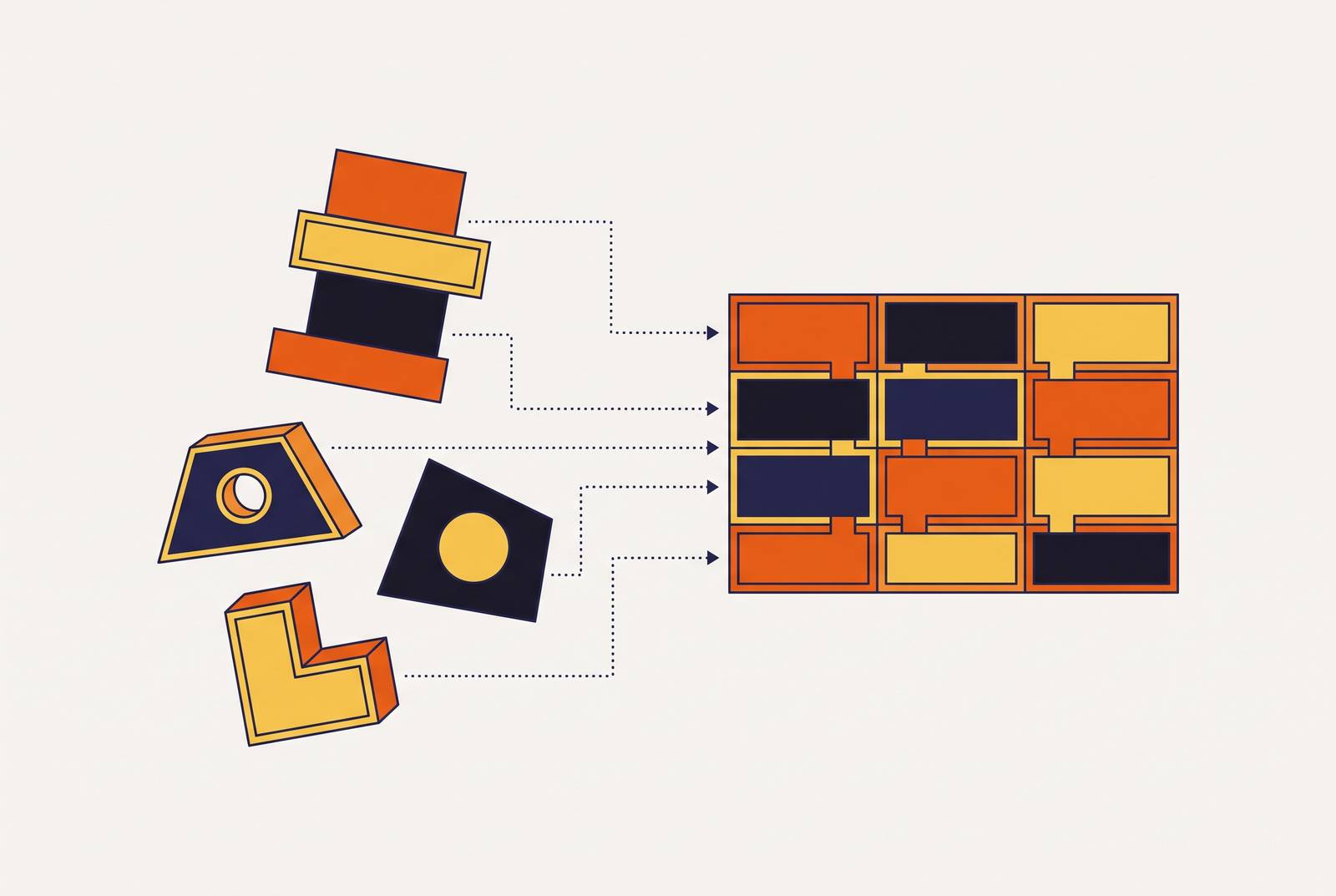
The audit output is a map, not a judgment. It shows which content covers the same ground, which covers genuinely different ground, and which is simply redundant. That map then sorts into three buckets before anyone opens a video editor or authoring tool. Bucket one is globally unifiable content. This covers how the product works, core compliance requirements shared across jurisdictions, and company-wide process standards. It can be consolidated into a single canonical version. Bucket two is locally variable content. This reflects regional workflows, local regulatory requirements, or language-specific user bases. It must be localized, not just translated. Bucket three is content to retire. This is redundant, outdated, or role-specific material that no longer maps to any current workflow. Producing it again in a new format is waste.
The triage output is an authoritative prioritization list. It says what gets unified first, what gets localized, and what gets cut. That gives production a sequence rather than a pile. The same logic applies to systems. The audit that supports system consolidation feeds content triage at the same time.
Why "globally unifiable" content is harder to identify than it looks
Teams routinely misclassify content as globally unifiable when it is actually carrying regional assumptions. Those assumptions hide in workflow, terminology, or compliance framing. The mistake surfaces only after production, at high cost. The test for global unifiability is not whether content covers the same topic. It is whether that content reflects identical workflows and identical regulatory obligations across every region it will reach.
Software walkthroughs are a common false positive. Two acquired teams may both have training on the same product feature. If one reflects a regional configuration, a localized pricing model, or a jurisdiction-specific compliance step, they are not the same content. Company-wide onboarding works the other way. It is often genuinely global in structure but locally variable in detail. The org chart, the mission, and the product overview can be unified. The payroll system, the compliance acknowledgment, and the HR policy sections usually cannot.
A master-course governance model is the architectural answer. A centrally governed master course carries the structure and core content. Regional versions inherit from it, with designated sections that local teams are allowed to modify. Updates to the master sync to regional instances automatically. That is what makes global governance scalable rather than a one-time exercise. Content that cannot sit in the master without modification is, by definition, not globally unifiable. It belongs in bucket two.
The Coursera and Udemy merger, which closed on May 11, 2026, shows the scale at which overlap and differentiation coexist in a combined company. The two platforms remain separate for now, pending integration. Both had deep libraries covering overlapping subject matter. Yet the content was built for different learner profiles, delivery formats, and enterprise compliance contexts. Automated consolidation would have been unreliable without human classification first.
Why localization must be designed into the source content, not retrofitted after it is built
The standard localization sequence is to build in English, approve in English, then translate. That works at small scale. At high volume it systematically delays global rollouts and produces content that resists localization. Localization is not translation. Effective regional training reflects local workflows and operational realities, not just local language. When a North American organization acquires European teams, safety certifications vary by country. Instructor availability does not overlap across time zones. A translated version of the English course addresses none of this.
The localization work that matters most is adapting workflow steps, compliance references, and role definitions. A translation API cannot do that. It requires subject-matter input from regional teams. The sequencing fix is to involve those teams during source-course design, before a word of content is written. Regional input at the design stage identifies which sections will need local modification. Those become the designated modifiable zones in the master-course governance model.
Content written with localization in mind avoids idiom, cultural reference, and structural assumptions. The payoff is that localization happens in parallel with English production, not after it. If the product interface is localized for regional markets, a walkthrough recorded in English against an English interface is wrong in every other language, not just untranslated. The architectural answer is to record against a clean, language-neutral interface state where possible. Separate the voiceover track from the visual layer so language substitution does not require re-recording the screen.
How AI-assisted production collapses the timeline once triage is complete
Once triage produces a prioritized list of what to unify and what to localize, the next bottleneck is production itself. The pre-AI problem was the production queue. A five-minute training video required a full day of scripting, recording, editing, subtitling, and revision before it could go live. That bottleneck was especially acute after an acquisition, when the content backlog doubled overnight and the production team did not.
AI-assisted workflows address each stage separately. Raw screen recordings or legacy SOPs become cleaned, professionally voiced scripts without manual rewriting. The AI handles consistency of tone and terminology across a unified content library. Lifelike voiceovers remove the dependency on a studio or a native speaker for each language. That makes parallel multilingual production practical rather than sequential. The combined content output per hour of production effort doubles.
For globally unifiable content, AI production means a single canonical video recorded once and translated into dozens of languages without re-recording. The voice track is swapped, the captions are regenerated, and the visual layer stays unchanged. That is what makes one-click localization a real production decision rather than a separate project. The source content is already structured for it, and the AI handles the language substitution. One-click translation across more than 60 languages means the same production run that produces the unified English library also produces the localized versions. For locally variable content, AI production means regional teams can modify designated sections without rebuilding the entire video. A regional compliance update becomes a targeted re-record of one segment, not a full production restart.
What to standardize at the content layer versus the delivery layer
Teams that successfully standardize content often still produce fragmented learning experiences. Content-layer standardization is about what learners watch and read. It means consistent terminology, consistent visual style, and consistent depth of explanation for equivalent roles across both legacy organizations. Content standardization also means role-based assignment. The right training reaches the right job function in the combined organization, not just anyone enrolled in a legacy LMS.
Delivery-layer standardization is about how learners access and complete training. It covers a unified LMS or learning platform, consistent enrollment logic, consistent completion tracking, and consistent reporting. Critically, it enables reporting that lets L&D answer executive readiness questions without caveats.
Sequencing is practical. Waiting for a fully unified LMS before producing any content means learners go without training for months. The two workstreams must run concurrently.
The customer education content that post-acquisition teams consistently deprioritize and shouldn't
Post-acquisition standardization almost always prioritizes internal employee training. Customer education content gets deferred. Customers of the acquired company are already at elevated churn risk. Standardized customer education is a retention mechanism, not just a support-cost reduction.
Getting-started and onboarding content comes first. Self-serve knowledge bases matter as a direct support-cost lever. A unified, searchable knowledge base built from both legacy content libraries is the highest-return asset here.
Screen-recording-based software walkthroughs are the right format for this content and the right place to apply AI-assisted production at volume. The customer education team produces two content assets per recording session rather than one. That directly addresses the content backlog that post-acquisition teams face.
How to sequence the production backlog so the most urgent content ships first
Even with AI-assisted production, a post-acquisition content backlog is too large to address all at once. Sequencing by business impact, not by ease of production, separates teams that ship useful content from teams that produce a lot and change nothing. A three-wave sequence maps directly to the triage output.
Wave one is compliance and safety content that carries legal or operational risk if it slips. This includes certification renewals with hard deadlines, safety training tied to specific equipment, and any content an audit could flag in the next quarter. Wave one ships in the first weeks after close, with the globally unifiable core produced once and localized where required.
Wave two is core product and role-based training for employees, followed by the customer-facing getting-started and feature-level how-to content. This is where AI-assisted production does the heaviest lifting. The canonical English library and the localized versions come from the same production runs.
Wave three is the long tail: advanced topics, optional role-specific material, and content that improves the experience but does not carry immediate risk. Wave three is where retirement decisions from bucket three get confirmed. Content that no longer maps to a current workflow is not rebuilt in a new format.
The governance discipline that keeps the sequence on track is a production ledger. That creates a single authoritative view of what has been produced, what is in progress, and what remains. It is the same visibility problem that causes L&D credibility loss in M&A contexts, solved by maintaining a production record rather than trusting an LMS enrollment report.
What readiness actually looks like and how to report it to leadership
The teams that emerge from post-acquisition training integration with increased organizational credibility are the ones that can answer readiness questions with data, not caveats. The distinction between vanity metrics and value metrics applies directly. Value metrics do. Time-to-productivity for onboarded employees from the acquired organization. Renewal rates in the integration cohort. These tell leadership whether training is producing the business outcomes the acquisition was supposed to deliver.
Cohort analysis is the right isolation method. Compare renewal rates, feature adoption, and support load for customer segments that received standardized training against those that did not. Use the acquisition date as the cohort anchor. This comparison gives L&D a defensible causal claim, not just a correlation, when presenting to the executive team.
For the L&D leader reporting internally, the readiness dashboard should answer three questions at any point during the integration period. Coverage: what percentage of employees and customers in the acquired organization have completed the wave-one content set. Currency: are compliance certifications current across both legacy organizations, tracked in a single system with automated renewal warnings. Velocity: is the wave-two content set being produced and published at the pace the integration timeline requires, and if not, where is the production bottleneck.
A triage-first approach followed by AI-assisted production does not just compress the timeline. The infrastructure built for one integration becomes easier to deploy for the next. That is the compounding advantage serial acquirers get, and it starts with the sorting discipline applied before the first new asset is produced.