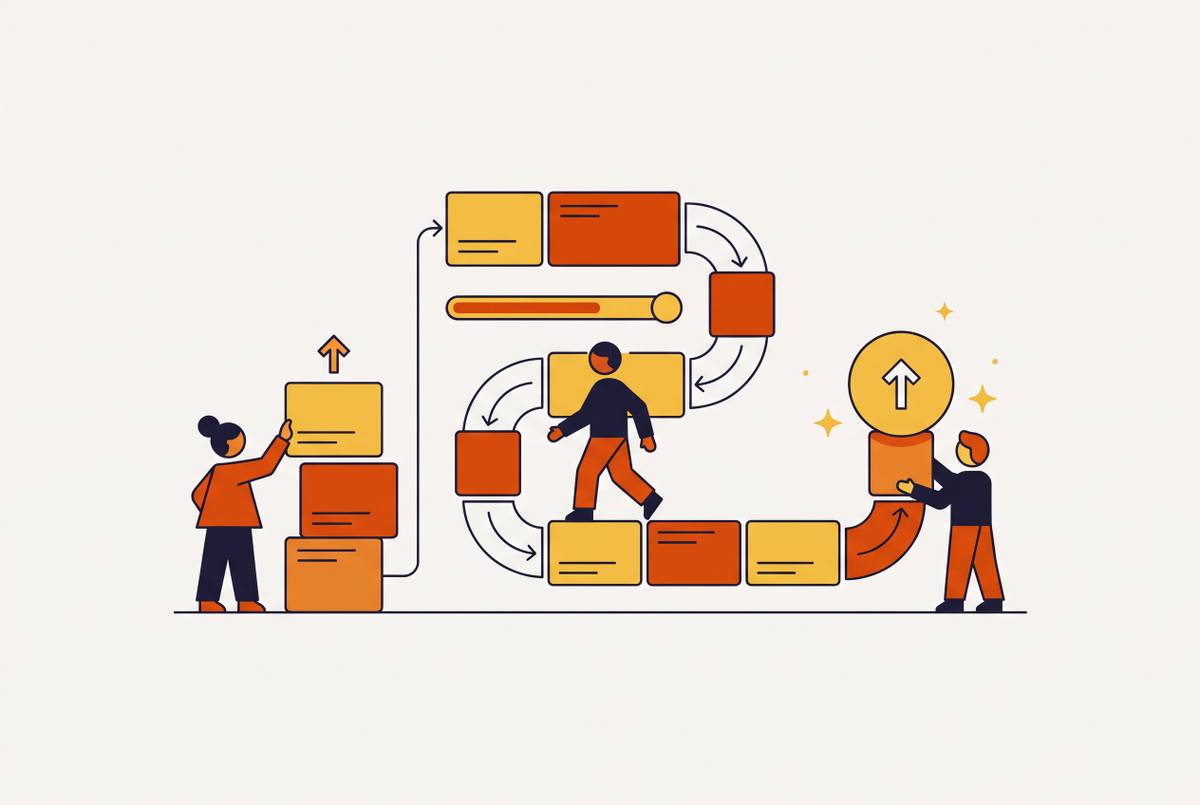
Continuous Software Training Programs for Ongoing Feature Releases
Training must become a continuous pipeline that ships updates with features, not months later.
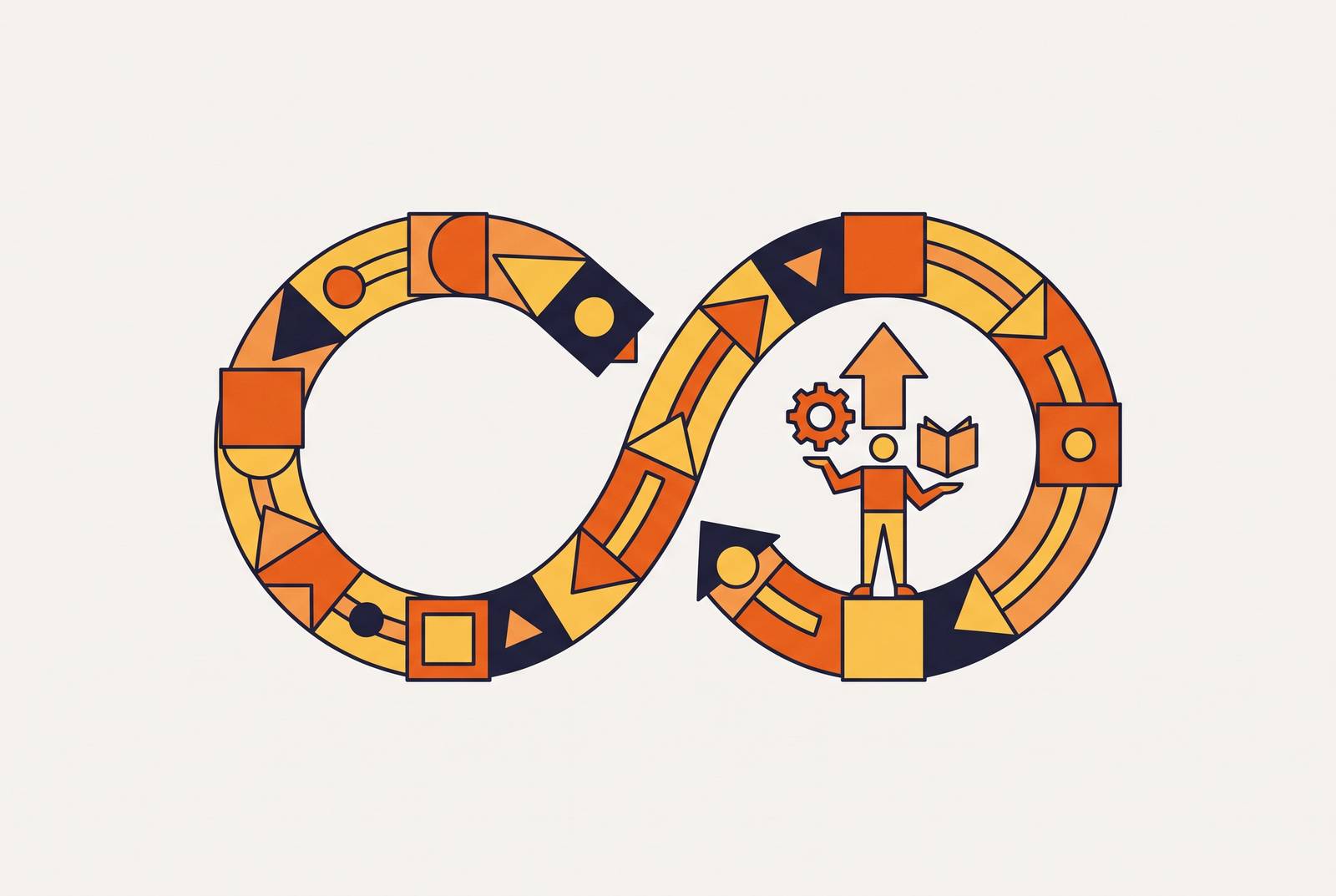
A learner follows a training video step by step: click here, open this menu, select that option. Except the button moved last Tuesday, in a release nobody told the training team about. Continuous software releases have outpaced the traditional training update cycle, and the fix is to build training as a living pipeline rather than a one-time publishing event: that gap between what the product does and what the training says to do is the subject of this piece.
Why release velocity has outpaced the traditional training update cycle
Software roadmaps move fast enough now that a training module can go from accurate to flat-out wrong in a single afternoon. Not stale, wrong. A renamed setting or a moved button doesn't make a module slightly outdated; it makes the module tell users to do something that is no longer possible. That's a different kind of failure than old content just sitting around getting dusty.
The traditional model treats a course as a finished object: scope it, produce it, review it, publish it, then leave it alone until a user complains. That worked when software shipped on a quarterly cycle. It doesn't work now. Software engineering in 2026 runs on continuous integration and continuous deployment, with features shipping many times a day on a constant release calendar. Training has no equivalent infrastructure. There's no pipeline that catches a shipped feature and automatically routes it to the people who need to update the course that covers it.
The cost appears in trust, not just accuracy. A learner who hits one wrong instruction doesn't just distrust that one module; they start to distrust the whole training program. Support tickets climb, feature adoption slows, and the training team spends its credibility one broken module at a time. None of this is a staffing shortage. Training was designed as a publishing event, and a publishing event can't keep pace with a sprint cycle, no matter how many people you throw at it.
What a content pipeline means
A content calendar answers a planning question: what gets published, and when? A content pipeline answers an operational question: when a feature ships, what happens next, automatically, without anyone having to remember to ask?
Picture two teams the week after a release. The calendar team finds out about the change when a user flags something wrong in a module, then scrambles to fit an update into next month's production slate. The pipeline team already has the update drafted, because the release itself triggered the update process days earlier. The feature ship is the trigger. The module revision is the response. No one has to notice the gap first.
This borrows directly from how software gets built. A code change triggers a build, a test, and a deploy, all without a person manually deciding each time that this particular commit deserves attention. A feature release should trigger a content update sequence the same way: identify which modules are affected, update the script, regenerate the assets, republish. The training team is wired into the same signal developers already get.
The reporting changes too. A calendar team tells stakeholders "the course is done." A pipeline team tells stakeholders "every module covering this sprint's features is current," a status you can check at any moment.
Modular content architecture as the prerequisite for fast updates
None of this works if the content itself is built the old way. A library made of long, monolithic courses cannot move at sprint speed, full stop on the practical reality of it: the format has to change before the process can.
The fix is the atomic instructional unit. One module, one task. Setting up a webhook. Configuring user roles. Exporting a report. Each one short enough to update in a single sitting, specific enough that a learner can find it when they need exactly that answer and nothing else.
Compare that to a 45-minute course stitching together ten different tasks into one workflow. Say a single menu item gets renamed, something as small as that. In the monolithic course, that one change means reshooting every connected segment that references the old name, re-editing the full timeline, re-exporting the whole thing. The update is expensive enough that teams quietly put it off, and the course keeps teaching the old name for weeks. In a modular library, that same rename touches one module. Someone updates it, regenerates it, republishes it, and the other nine modules in that workflow never have to be touched.
Modular design also lets training reach the right person with the right update. A user affected by one changed feature gets one updated module, not a nudge to re-enroll in a 45-minute course to relearn nine things they already know. Each module should stand on its own, completable and updatable without depending on five others, so a single change never cascades into a dozen edits.
This has production consequences, not just instructional design ones. A focused module can be reshot and rebuilt as its own self-contained unit without anyone touching the rest of the library. Tools that can turn a fresh screen recording into finished video and documentation matter to making modular pipelines workable in practice. Clueso, for instance, can turn a new screen capture into a polished video and matching step-by-step documentation in minutes, which makes it realistic for a training team to regenerate one module on sprint timing instead of waiting until a full course rebuild feels worth scheduling.
Remote training platforms built for structured delivery can support this model too, but only when they're set up around modular paths instead of locked, fixed course sequences. In that setup, the learning platform works as an assembly layer that pulls current modules together, not a container that locks a course in place the day it's published.
Connecting the training team to the release process before features ship
A team that waits for release notes to show up is already behind. The fix is structural: put L&D or customer education inside the release cycle itself, upstream of the ship date, not downstream of the complaint.
Here's the lag most teams live with. A feature ships. Someone on the CS or L&D side eventually reads the release note, flags the module it affects, and schedules time to fix it. By the time that update goes live, users have already been using the feature without any training support at all, and some of them have already formed the wrong habits.
The upstream version looks different. Training content owners sit in on sprint reviews or get the feature spec before the build is even final. Scripts get drafted, reviewed, and staged while the feature is still sitting in QA. When a module needs updating because that signal already arrived, the workflow has to move fast enough that it doesn't become the new bottleneck: recording a screen capture of the changed feature and regenerating its video and documentation should take minutes, not days. That speed requirement is why self-service video and documentation tools built for fast iteration have become basic infrastructure for teams trying to operate at sprint velocity.
Making this work day to day doesn't require fancy tooling, just a few fixed integration points: a shared channel or ticket label that flags which changes are "training-impacted" during sprint planning, a standing spot on the sprint review agenda for content owners, and a staging environment for content that mirrors the product's own staging environment. CI/CD pipelines in 2026 increasingly fold security scans and automated tests directly into the build process, though adoption is still uneven across the industry. The same logic applies to training: make content verification a line item on the release checklist.
The target is simple to state and hard to fake: training assets should be ready to publish the day the feature ships. A published time-to-update service level agreement turns that target into something you can actually measure.
How AI-assisted production enables sprint-cadence updates for small teams
The honest reason most training teams can't update at release speed is production time, not a knowledge gap. Teams know what changed. They just can't turn that knowledge into a finished module fast enough, and AI-assisted production attacks that exact bottleneck.
The old sequence for updating one module: rewrite the script, re-record the voiceover, re-shoot or re-edit the screen capture, re-export captions, re-upload to the learning platform. Each step needs scheduling, and several need a specialist, whether that's a narrator, an editor, or someone who knows the export settings cold. Multiply that by dozens of modules and a weekly release cadence, and the math stops working for any team without a large production budget.
The AI-assisted sequence compresses that into four steps: update the script, regenerate the voiceover, apply zoom and captions automatically, export. What used to take days now takes minutes, and none of it requires a recording booth or a dedicated video editor.
Script updates carry the most weight, because the script carries the facts. When a feature changes, the factual content of the training changes with it, and getting that script right fast is the real constraint. Feeding the updated product spec or release note into an AI rewriting workflow removes that constraint directly.
Voiceover regeneration solves a problem that's easy to underestimate. Re-recording with a human narrator means booking time and trying to match the original recording's tone and pacing, which is harder than it sounds when the original was recorded six months ago by someone who's since left the team. An AI voiceover regenerates straight from the updated script, instantly, keeping the same voice and tone across every version of the module.
The same update workflow can refresh the accompanying documentation at the same time as the video, so the SOP or step-by-step article updates in sync with the video and skips its own separate writing pass. Clueso's workflow is a direct example: a content owner uploads a screen recording or edits a script, and the platform handles the voiceover, the zoom, the captions, and the matching documentation in one pass. That's what lets one person maintain a large modular library at release speed without any video production background.
Any tool claiming to solve this must let someone who isn't a video specialist update a published module, video and documentation both, in one sitting. If the answer is no, the tool hasn't solved the problem the pipeline exists to solve.
Keeping training current across global teams without multiplying production effort
Localization is where most pipelines quietly fall apart. A team that produces fast in English but treats translation as a separate project afterward has given away the entire speed advantage it just built.
The old model: produce the English version, send it to a translation agency or regional team, wait weeks for translated assets to come back, then reintegrate them into the learning platform. By the time that round trip finishes, the English source content may have already changed again in a later release. Global learners end up a full version or more behind the current product, which makes their gap worse than the lag English speakers deal with.
Closing that gap means running localization in the same cycle as the original production, not as a downstream project with its own separate timeline. AI-powered translation built into the production tool changes the math here: a module updated in English can be re-localized into every supported language in that same session, with no separate agency engagement and no manual re-edit per language. Clueso, for example, supports translation into 60+ languages with one-click localization, so a content owner updating a module for a new feature can push that update across every language version without treating each language as its own production job.
Speed doesn't replace judgment here. Regional subject-matter experts still need to review localized scripts and videos before wide rollout, especially for terminology that's product-specific or culturally sensitive. A lightweight regional review step belongs in the pipeline, not as a thing to skip once translation gets fast.
Enterprise platforms built for multilingual delivery and accessibility at scale are the right distribution layer for this, because content produced quickly only helps if it actually reaches the right learner in the right language.
Publishing Training Without a Single Content Bottleneck
A pipeline that runs through one person or one central team just moves the bottleneck. The pipeline scales when subject-matter experts across the organization can update content themselves.
The knowledge and the production skill rarely live in the same person. A product manager knows the new feature best. A customer success lead knows exactly where users get stuck. A sales engineer knows how to demo it convincingly. None of them, typically, can produce a polished training video on their own, and in most organizations that means content requests queue up behind one central team while the people who actually understand the change wait for someone else to find time for it.
The fix is giving each function a production tool simple enough to use without a video background, paired with guardrails: branded templates, consistent voiceover styles, standard formatting, so quality holds up without requiring central review of every single update. Clueso is built around exactly this model: anyone on CS, L&D, product, or sales can record or upload a screen capture and get a polished, branded video with matching documentation, with no video editor or instructional designer in the loop. Enterprise remote training platforms that support role-based delivery let this work without collision, so when CS updates a customer-facing module and product updates an internal workflow module at the same time, both move through the same system without stepping on each other.
Distributed authorship still needs governance, and it needs to be taken seriously. A shared naming convention for modules. A content ownership log naming who owns each module and who's responsible for keeping it current. A clear process for retiring outdated versions once an update goes live. That governance layer separates "anyone can publish" from chaos and deserves real attention: without it, a distributed pipeline quietly degrades into five disconnected libraries.
Sales enablement is a clean example of why this matters. Sales training platforms in 2026 that connect practice scenarios to product knowledge depend on product training that's actually current. If that training lags behind the product, readiness scores stop meaning anything.
Measuring whether the pipeline is working
Completion rate is the metric most teams are already using, and it's the wrong one for this job. It tells you who clicked through a module. It says nothing about whether a user can actually perform the task after a feature change, and nothing about whether the training was even current when they took it.
A pipeline needs different measures, tied to currency and speed. Content currency rate tracks what percentage of modules covering released features are up to date at any given moment, a measure of pipeline health. Time-to-update tracks how long after a feature ships the matching training module actually publishes, the pipeline's core speed metric, and a published service level agreement makes that number something you can hold the team to. Support ticket correlation checks whether tickets tied to a specific feature drop off after the matching module gets updated and redelivered, a leading sign the pipeline is reaching learners at the moment they need it. Product adoption by cohort compares users who completed updated feature training against those who didn't, to see who activates the feature faster. Time-to-competency per feature measures how quickly a user can demonstrate correct use of a new feature once the module publishes, one example of the kind of Level 4 Results measure the higher levels of the Kirkpatrick model point toward.
A few warning signs appear together when the pipeline is failing: the content currency gap widens as modules fall behind new releases, support tickets climb on features that shipped recently, and engagement with training drops because learners have quietly learned not to trust it. All three point back to the same root cause, a pipeline that isn't keeping pace with the release cycle.
When that happens, the fix is usually one of three things. The modules might still be too large; the modular architecture needs further decomposition before updates can move fast. The upstream connection to the release process might have broken down, so training is finding out about changes too late again. Or the production tool itself is the bottleneck, and an AI-assisted workflow could remove the delay that's piling up there. Diagnosing which of the three it is turns the pipeline from a thing you built once into a system you can actually keep tuned.